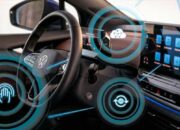


The experience of driving a modern vehicle has fundamentally shifted from a purely mechanical and analog interaction to a complex, multi-sensory digital experience. The automobile, once primarily defined by its engine and chassis, is now fundamentally a rolling, high-performance computer. The primary interface between the human and this complex machine is the digital cockpit.
This integrated system—encompassing all displays, controls, and infotainment screens—is the non-negotiable hub for vehicle management, communication, and entertainment. The current revolution in this space is driven by the rapid integration of Artificial Intelligence (AI).
AI transforms the cockpit from a passive array of instruments into an active, highly personalized, and predictive co-pilot. Digital Cockpits Get Smarter represents the indispensable, specialized technological discipline dedicated entirely to designing, securing, and optimizing this critical in-car user experience (UX).
Understanding the core software architecture, the reliance on high-performance computing, and the strategic necessity of creating seamless, personalized interactions is absolutely paramount. This knowledge is the key to comprehending the engine that drives modern automotive design, enhances safety, and secures a continuous, high-value, recurring revenue stream.
The Irreversible Shift to Software-Defined Vehicles
The foundational architecture of the modern car is rapidly evolving into a Software-Defined Vehicle (SDV). In an SDV, the majority of the vehicle’s functional value—including performance characteristics, safety features, and user experience—is determined by the code, not by the mechanical hardware. This profound transformation mandates that the digital cockpit assumes a central, indispensable role. The cockpit is the primary visual and interactive portal to this complex software layer.
Historically, in-car electronics were simple, isolated units. Today, the digital cockpit is managed by centralized High-Performance Computers (HPCs). These powerful computers process immense volumes of data from sensors, cameras, and network connections instantly. This centralization is mandatory for running sophisticated AI models and delivering real-time functional updates.
The strategic value for automakers is clear. The digital cockpit facilitates new, high-margin subscription services and features that can be sold to the consumer long after the initial vehicle purchase. This capability creates predictable, recurring revenue streams. The software environment provides a massive revenue opportunity.
The entire design philosophy is pivoting toward a seamless user experience (UX). The interface must be intuitive and non-distracting. This is critical for safety. The integration of advanced features must simplify the driver’s task, not add unnecessary cognitive burden.
Core Technological Architecture
The intelligence and responsiveness of the digital cockpit rely on the synergistic integration of high-end computational hardware, advanced sensor data, and continuous network connectivity. This architectural foundation ensures the system can operate safely and instantaneously. Performance and stability are non-negotiable.
A. High-Performance Computers (HPCs)
The cockpit is powered by centralized High-Performance Computers (HPCs). These specialized processors integrate high-core CPUs and powerful GPUs into a single unit. HPCs are essential for handling the massive, parallel processing demands of advanced features. These features include real-time 3D navigation mapping, complex sensor fusion, and sophisticated AI algorithms.
B. Sensor Fusion and Data Processing
AI relies on sensor fusion. This is the process of combining chaotic, real-time data from all onboard sensors—Lidar, Radar, and cameras—into a single, unified, reliable model of the external environment. The cockpit displays critical outputs from this model instantly. This integration is mandatory for safety systems and autonomous driving features. The seamless display of this synthesized information minimizes driver reaction time.
C. Over-the-Air (OTA) Updates
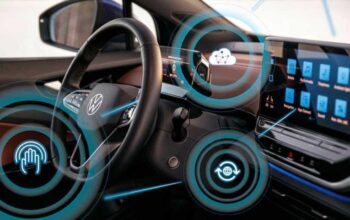
The SDV architecture requires continuous Over-the-Air (OTA) updates. These updates, delivered wirelessly via the network, enhance performance, fix software bugs, and introduce entirely new features and functions. OTA updates transform the vehicle from a static product into an evolving digital platform. This capability ensures the vehicle’s software remains current and secure throughout its lifespan.
D. Vehicle-to-Everything (V2X) Communication
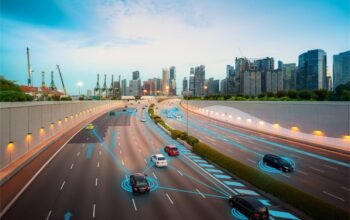
The cockpit utilizes Vehicle-to-Everything (V2X) communication. V2X allows the vehicle to exchange real-time data instantly with other cars (V2V) and with surrounding infrastructure (V2I). The system alerts the driver to non-visible hazards, traffic congestion, and nearby road work. V2X enhances collective road safety and optimizes routing efficiency across the entire network.
AI and Hyper-Personalization

The integration of Artificial Intelligence (AI) is the singular force transforming the digital cockpit into a truly smart, personalized, and predictive interface. AI moves the system from generic information display to dynamic, anticipatory interaction. Hyper-personalization is the key to driver satisfaction.
E. Driver Monitoring and Biometrics
AI employs Driver Monitoring Systems utilizing internal cameras and biometric sensors. These systems track the driver’s head movements, eye gaze, and physiological signals (e.g., heart rate). The AI detects signs of fatigue, distraction, or impairment. It can then issue immediate warnings or, in L3/L4 vehicles, execute the necessary takeover protocol. Biometric sensors also enable personalized profile login instantly.
F. Predictive Navigation
Predictive Navigation systems utilize AI to learn the driver’s routine destinations, preferred routes, and typical commuting times. The system proactively suggests necessary routes, provides real-time warnings of unexpected congestion, and dynamically updates estimated arrival times. This anticipatory assistance reduces driver stress and enhances travel efficiency.
G. Voice and Gesture Control
The interface is moving away from manual touch controls. Advanced voice and gesture control systems allow the driver to manage infotainment, navigation, and climate control naturally and intuitively. This hands-free operation minimizes driver distraction. It enhances the overall safety of the vehicle. AI-powered Natural Language Processing (NLP) is necessary for interpreting complex verbal commands accurately.
H. Contextual Information Display
AI enables contextual information display. The system filters the massive stream of data. It presents only the information that is immediately relevant to the current driving task and environment. During highway driving, the system prioritizes ADAS alerts and navigation data. During urban parking, it switches focus to surround-view cameras and proximity sensors. This reduces cognitive load.
User Experience (UX) and Design Trends
The design of the digital cockpit is governed by strict User Experience (UX) principles. The visual layout, the responsiveness of the interface, and the quality of the display technology are non-negotiable factors in ensuring safe, intuitive, and satisfying driver interaction. UX is mandatory for safety.
I. Augmented Reality (AR) Dashboards
Augmented Reality (AR) Dashboards and Heads-Up Displays (HUDs) project critical information (speed, navigation arrows, safety warnings) directly onto the driver’s field of view. The AR display overlays the digital data onto the real-world road. This crucial technique minimizes the time the driver’s eyes must spend looking away from the road surface. AR enhances both safety and informational awareness.
J. High-Resolution, Seamless Displays
The cockpit utilizes large, high-resolution OLED or Micro-LED displays that often span the entire width of the dashboard. The physical integration of these seamless glass surfaces enhances the aesthetic and technological appeal. High resolution and brightness are mandatory for ensuring clear visibility under direct sunlight conditions. Visual quality enhances the premium feel.
K. Haptic Feedback and Controls
The interface is integrating haptic feedback controls. Haptic elements provide a tactile response to virtual buttons and touch screens. This subtle physical confirmation allows the driver to confirm input actions without having to visually confirm the touch. This crucial sensory feedback enhances safety by keeping the driver’s eyes on the road.
L. Cybersecurity of In-Car Software
Cybersecurity of the cockpit software is a critical, high-stakes safety concern. The system must be protected from external hacking that could remotely compromise control functions or steal sensitive personal data. Secure, encrypted network architectures and continuous OTA security patching are non-negotiable requirements. The integrity of the in-car software is paramount.
Conclusion

Digital Cockpits are the indispensable, intelligent interface for the software-defined vehicle (SDV).
The architecture relies on centralized High-Performance Computers (HPCs) to process sensor fusion and run complex AI models instantly.
AI transforms the cockpit into a personalized co-pilot through predictive navigation and biometric monitoring for fatigue detection.
Advanced sensor fusion processes complex data from Lidar, Radar, and cameras into a unified model for real-time safety decision-making.
OTA updates are the mandatory mechanism that continuously enhances vehicle performance and introduces new subscription features wirelessly.
The integration of V2X communication enables the vehicle to exchange critical data instantly with surrounding infrastructure, optimizing traffic flow.
The user experience (UX) is driven by AR Dashboards and Heads-Up Displays (HUDs), which prioritize information placement for maximum driver safety.
Voice and gesture controls minimize manual interaction, reducing driver distraction and enhancing the overall safety and intuitive operation of the vehicle.
The implementation of sophisticated haptic feedback confirms input actions, allowing the driver to keep their eyes reliably focused on the road.
The system’s integrity requires rigorous cybersecurity protocols and continuous patching to protect the critical software layer from external attacks.
Mastering the UX of the digital cockpit is the ultimate key to securing the highest level of safety, personalization, and operational efficiency.
AI-enabled cockpits are the final, authoritative guarantor of future recurring revenue streams and sustained competitive advantage for automakers.