

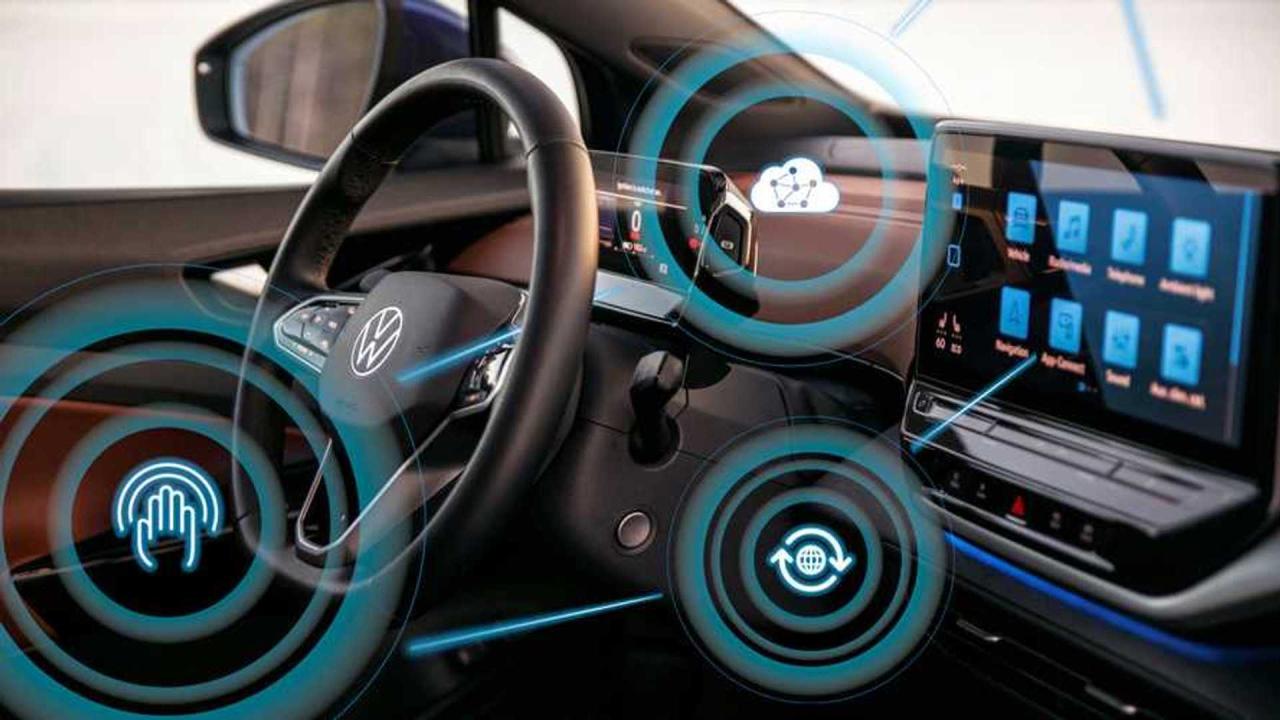
The Digital Transformation of the Automobile

The rapid integration of sophisticated software into every facet of vehicle operation has fundamentally redefined the automobile. This digital metamorphosis makes software updates not just beneficial, but essential.
A. Vehicle as a Software-Defined Product:
* Impact: In the past, a car’s capabilities were largely fixed at the point of sale. Today, a significant portion of a vehicle’s functionality, performance, and user experience is determined by its software. This means features can be added, removed, or enhanced long after the car leaves the factory.
* Driving Force: This shift is driven by the increasing complexity of vehicle systems, the demand for greater customization, and the need for adaptability to evolving regulations and consumer preferences. Software allows for agility that hardware alone cannot provide.
B. Increased Electronic Control Units (ECUs):
* Impact: Modern vehicles contain dozens, sometimes over a hundred, ECUs, each controlling specific functions like engine management, braking, steering, airbags, infotainment, and advanced driver-assistance systems (ADAS). These ECUs run dedicated software that needs to be synchronized and updated.
* Driving Force: The move towards electronic control in virtually every system, from fuel injection to active suspension, necessitated these distributed computing nodes, each requiring its own software.
C. Ubiquitous Connectivity:
* Impact: Most new vehicles are now equipped with integrated cellular modems, Wi-Fi capabilities, and Bluetooth connectivity. This constant connection enables remote diagnostics, real-time navigation updates, streaming services, and critically, over-the-air (OTA) software updates.
* Driving Force: Consumer demand for seamless digital integration, as well as the needs of automakers for remote fleet management, data collection, and efficient service delivery, have made connectivity a standard feature.
D. Development of Advanced Driver-Assistance Systems (ADAS) and Autonomous Driving:
* Impact: Features like adaptive cruise control, lane-keeping assist, automatic emergency braking, and eventually full self-driving capabilities are almost entirely software-driven. These systems rely on complex algorithms that are continuously refined and improved.
* Driving Force: The relentless pursuit of enhanced safety and the promise of autonomous mobility necessitate constant software iteration, as these systems learn from real-world data and become more robust.
E. New Business Models and Revenue Streams:
* Impact: Software updates are unlocking new revenue opportunities for automakers. This includes subscription services for premium features (e.g., enhanced navigation, heated seats), feature-on-demand offerings, and personalized digital experiences.
* Driving Force: Automakers are looking to move beyond one-time vehicle sales to establish recurring revenue streams throughout the vehicle’s lifespan, mimicking the software-as-a-service (SaaS) model.
Types of Automotive Software Updates
Automotive software updates encompass a broad spectrum, ranging from critical safety patches to aesthetic enhancements, each delivered with specific purposes and methodologies.
A. Security Updates:
* Purpose: To patch newly discovered cybersecurity vulnerabilities that could be exploited by malicious actors. These are critical for protecting vehicle systems from hacking, data breaches, and unauthorized control.
* Impact: Essential for maintaining the integrity, safety, and privacy of the vehicle and its occupants. Often deployed urgently.
B. Safety and Recall Updates:
* Purpose: To address software-related defects that could compromise vehicle safety, potentially leading to a recall. This might involve correcting errors in braking systems, airbag deployment logic, or engine control.
* Impact: Directly prevents accidents, mitigates risks, and fulfills regulatory compliance requirements, often avoiding costly physical recalls.
C. Performance Enhancements:
* Purpose: To optimize vehicle performance, such as improving engine efficiency, enhancing power delivery, refining transmission shifting, or improving battery management for electric vehicles (EVs).
* Impact: Can lead to better fuel economy, increased horsepower, smoother driving dynamics, or extended EV range, enhancing the driving experience.
D. Feature Additions and Upgrades:
* Purpose: To introduce entirely new functionalities or improve existing ones. This can range from new infotainment apps to enhanced ADAS capabilities, or even new lighting patterns.
* Impact: Keeps the vehicle feeling fresh and modern, potentially increasing its resale value, and provides customers with continuously evolving capabilities.
E. Bug Fixes and Stability Improvements:
* Purpose: To resolve software glitches, improve system responsiveness, fix crashes, and enhance the overall stability and reliability of the vehicle’s electronic systems.
* Impact: Addresses user frustrations, improves the user experience, and reduces the likelihood of malfunctions or system errors.
F. Regulatory Compliance Updates:
* Purpose: To adapt vehicle software to comply with new or changing government regulations concerning emissions, safety standards, or data reporting.
* Impact: Ensures the vehicle remains legal and compliant throughout its lifespan, avoiding fines or restrictions.
G. User Interface (UI) and User Experience (UX) Refinements:
* Purpose: To improve the visual design, intuitiveness, and responsiveness of in-car displays, infotainment systems, and driver interfaces.
* Impact: Makes the vehicle’s digital environment more pleasant and easier to use, similar to updates on a smartphone or computer.
Over-the-Air (OTA) Updates
Over-the-Air (OTA) updates are the cornerstone of modern automotive software delivery, allowing for seamless and efficient updates without a trip to the dealership.
A. Cloud-Based Infrastructure:
* Mechanism: Automakers host their software update files on secure cloud servers. These servers manage the update process, including version control, distribution, and authentication.
* Impact: Provides a scalable and centralized platform for managing updates to millions of vehicles globally.
B. Vehicle Connectivity Module:
* Mechanism: Vehicles are equipped with a cellular modem or Wi-Fi connectivity that allows them to securely connect to the automaker’s cloud servers.
* Impact: Enables the vehicle to download update packages remotely, anywhere with sufficient network coverage.
C. Secure Update Channels:
* Mechanism: Data is transmitted over encrypted and authenticated channels to prevent tampering or interception during download. Digital signatures verify the authenticity and integrity of the update package.
* Impact: Crucial for cybersecurity, ensuring that only legitimate and untampered software is installed on the vehicle.
D. Update Management Software (In-Vehicle):
* Mechanism: Dedicated software within the vehicle manages the update process. This includes downloading segments, verifying integrity, preparing the installation, and scheduling the update installation (often when the vehicle is parked and off).
* Impact: Orchestrates the complex installation process across multiple ECUs, minimizing disruption to the user.
E. Delta Updates (Differential Updates):
* Mechanism: Instead of downloading entire new software packages, only the changed “delta” portions of the code are transmitted.
* Impact: Significantly reduces download times and data consumption, making updates faster and more efficient, especially for minor fixes.
F. Rollback Capabilities:
* Mechanism: A safety feature that allows the vehicle’s system to revert to a previous, stable software version if an update fails or causes unexpected issues.
* Impact: Prevents vehicles from becoming inoperable due to update errors, ensuring system resilience.
G. User Notification and Consent:
* Mechanism: Drivers are typically notified via the vehicle’s infotainment screen or a companion smartphone app that an update is available. They usually have the option to schedule the installation at a convenient time.
* Impact: Ensures transparency and gives the user control over when updates occur, respecting their schedule and preferences.
Benefits of Automotive Software Updates
The ability to update vehicle software offers a multitude of advantages for both automakers and consumers, transforming the entire ownership experience.
A. Enhanced Safety and Reliability:
* Benefit: Critical safety vulnerabilities or software bugs can be patched quickly and efficiently across an entire fleet, often before a widespread problem arises. This can prevent accidents and reduce the need for costly physical recalls.
* Example: An update might refine the automatic emergency braking system’s sensor calibration or improve airbag deployment logic.
B. Improved Performance and Efficiency:
* Benefit: Software refinements can optimize engine tuning for better fuel economy, increase horsepower, smooth transmission shifts, or extend the range and charging efficiency of electric vehicles.
* Example: Tesla’s famous performance boosts via software or updates that improve battery degradation curves.
C. Introduction of New Features and Functionalities:
* Benefit: Vehicles can gain entirely new capabilities long after purchase, keeping them fresh and competitive. This extends the product’s lifecycle and perceived value.
* Example: New infotainment apps, advanced navigation features, enhanced voice commands, or even hands-free driving capabilities (like Ford BlueCruise or GM Super Cruise) delivered post-purchase.
D. Reduced Maintenance and Service Costs:
* Benefit: Many diagnostic issues can be remotely identified, and sometimes even fixed, via software updates, reducing the need for dealership visits. Predictive maintenance can be enabled.
* Example: A software update might resolve a minor engine anomaly that would otherwise require a trip to the mechanic.
E. Increased Customer Satisfaction and Loyalty:
* Benefit: Customers appreciate a vehicle that continuously improves and gains new features, leading to higher satisfaction and fostering brand loyalty. It creates a sense of a “living” product.
* Example: Owners feel their investment is safeguarded and their vehicle remains cutting-edge.
F. Extended Vehicle Lifespan and Resale Value:
* Benefit: A vehicle that receives regular updates for safety, performance, and features remains more desirable and functional over time, potentially retaining higher resale value.
* Example: A car with updated ADAS features from 5 years ago will be more attractive than one without.
G. Faster Response to Regulatory Changes:
* Benefit: Automakers can quickly adapt vehicle systems to comply with new emissions standards, safety mandates, or cybersecurity regulations through software updates, avoiding costly redesigns or extensive physical recalls.
* Example: Adjusting engine parameters to meet new emissions limits in a specific region.
H. Enabling New Business Models:
* Benefit: Software updates facilitate subscription services for premium features (e.g., heated seats, enhanced performance modes) or features on demand, creating recurring revenue streams for automakers.
* Example: Audi offering “Functions on Demand” or Mercedes-Benz providing performance upgrades as a subscription.
Challenges and Considerations for Automotive Software Updates

While highly advantageous, the implementation and management of automotive software updates present significant technical, logistical, and ethical challenges.
A. Cybersecurity Risks:
* Challenge: The primary concern. If the update process or communication channel is compromised, attackers could inject malicious code, take control of the vehicle, or steal data. The risk of widespread, fleet-level attacks is high.
* Solution: Robust encryption, digital signatures, secure boot mechanisms, intrusion detection systems, and continuous vulnerability management are paramount.
B. System Complexity and Interdependencies:
* Challenge: Modern vehicles have a vast network of interconnected ECUs. An update to one system could inadvertently affect another, leading to unexpected behaviors or malfunctions. Thorough testing is critical.
* Solution: Modular software architectures, comprehensive regression testing, simulation, and hardware-in-the-loop testing.
C. Bandwidth and Data Costs:
* Challenge: Large update files require significant data bandwidth, which can be a concern for areas with poor cellular coverage or for customers with data caps.
* Solution: Delta updates, intelligent scheduling of downloads (e.g., using Wi-Fi when available), and efficient compression algorithms.
D. User Acceptance and Trust:
* Challenge: Some users may be hesitant to install updates due to fear of introducing new bugs, concerns about privacy, or a desire for physical dealership interaction.
* Solution: Clear communication about update content, robust rollback capabilities, transparent privacy policies, and a track record of reliable updates.
E. Regulatory and Legal Liability:
* Challenge: Who is liable if a software update causes an accident? How are new features deployed via software regulated? These questions are still being addressed by legal frameworks worldwide.
* Solution: Evolving regulatory standards (e.g., UNECE WP.29 regulations for software update management systems – SUMS), clear communication of responsibilities, and robust testing.
The Future of Automotive Software Updates
The trajectory of automotive software updates points towards even greater integration, intelligence, and a personalized experience.
A. Predictive and Proactive Updates:
* Trend: Leveraging AI and vehicle data to predict potential component failures or software issues before they occur, allowing for proactive software adjustments or maintenance recommendations.
* Impact: Reduces unexpected breakdowns and improves vehicle longevity.
B. Personalized Feature Delivery:
* Trend: Updates tailored to individual driver preferences, driving habits, or even geographic location, offering a highly personalized vehicle experience.
* Impact: Enhances user satisfaction and creates a truly bespoke driving environment.
C. Full Lifecycle Management through Software:
* Trend: Software becoming central to every stage of the vehicle’s lifecycle, from initial design and manufacturing to end-of-life decommissioning, optimizing processes and tracking components.
* Impact: Greater efficiency, sustainability, and transparency across the entire automotive value chain.
D. Integration with Smart Cities and Ecosystems:
* Trend: Vehicles receiving updates that integrate them more seamlessly into smart city infrastructure (e.g., dynamic routing based on real-time traffic grid data, coordinated autonomous driving platoons).
* Impact: Contributes to more efficient, safer, and sustainable urban mobility systems.
E. Over-the-Air Firmware Updates for Components:
* Trend: Beyond main vehicle software, individual components (e.g., tires with embedded sensors, smart seating systems) receiving their own OTA updates for performance or functionality enhancements.
* Impact: Enables granular control and continuous improvement across the vehicle’s complex ecosystem.
Conclusion
The phrase “Automotive Software Updates” signifies a fundamental shift in the very essence of what a car is. No longer a static product, the modern vehicle is a dynamic, continuously evolving digital platform, its capabilities shaped and refined by lines of code. This digital evolution brings immense benefits: enhanced safety, improved performance, and the constant infusion of new features that keep vehicles relevant and exciting. While significant challenges, particularly in cybersecurity and regulatory harmonization, must be rigorously addressed, the trajectory is clear. Software updates are indispensable for the future of transportation, ensuring that our vehicles remain secure, efficient, and increasingly intelligent. They are literally driving the evolution of mobility, promising a future where your car gets better with age, not just older.