

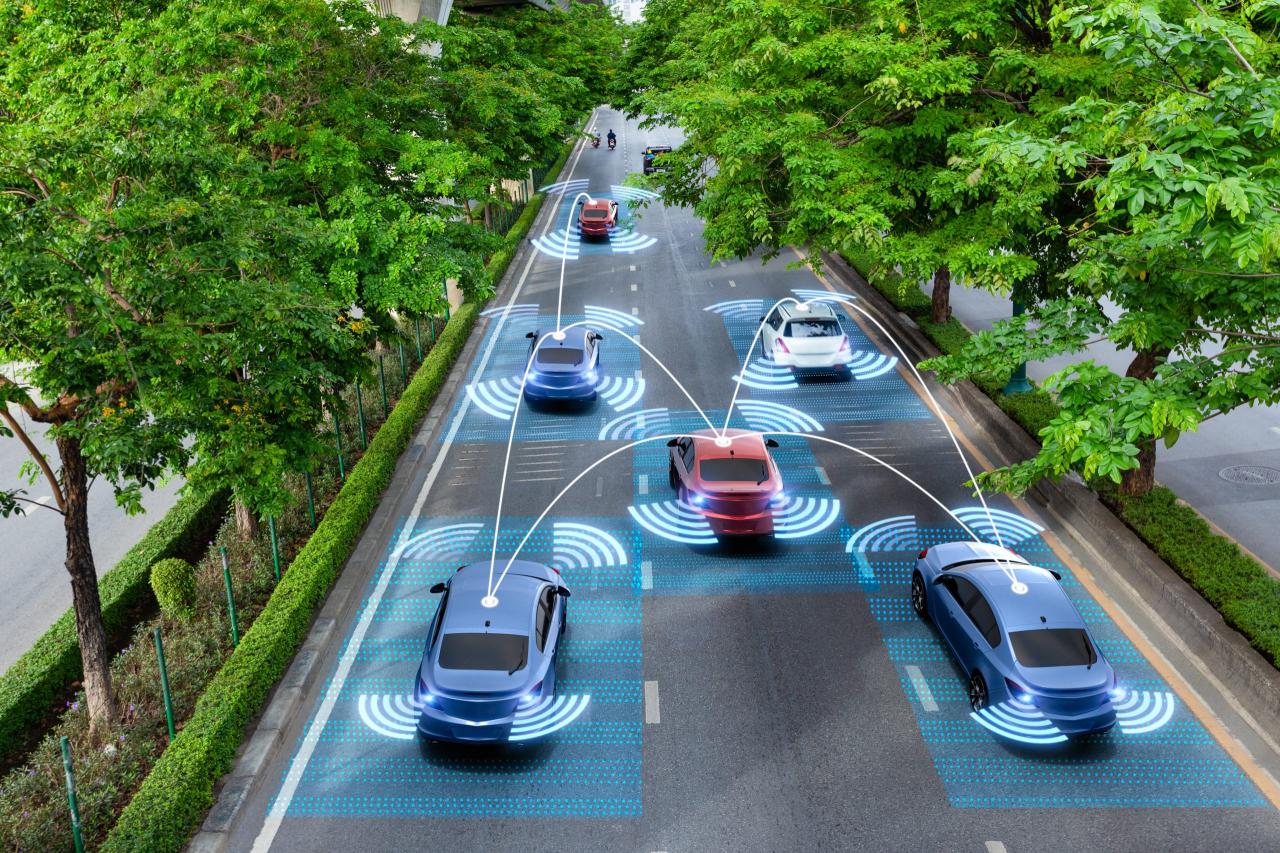
The advent of autonomous vehicles (AVs) promises a revolutionary shift in transportation, offering potential benefits from enhanced safety and reduced congestion to increased accessibility and new economic opportunities. Yet, the road to widespread AV deployment is paved with complex challenges, chief among them the development of robust and adaptable “Autonomous Vehicle Regulations.” Unlike traditional automobiles, self-driving cars introduce entirely new paradigms of responsibility, safety validation, data privacy, and ethical considerations. Crafting a legal and policy framework that fosters innovation while prioritizing public safety is a monumental task, currently unfolding in diverse ways across the globe. This article delves into the intricate world of AV regulation, exploring the frameworks being built, the challenges faced, and the pivotal role of policy in shaping our autonomous future.
The Imperative for Autonomous Vehicle Regulations

The necessity for comprehensive AV regulations stems directly from the transformative nature of the technology itself. Without clear rules, the industry faces uncertainty, hindering investment and deployment, while the public faces potential risks and a lack of clear recourse.
A. Ensuring Public Safety:
* This is the paramount concern. Unlike human drivers, AVs operate based on algorithms and sensor data. Regulations must ensure these systems are rigorously tested, validated, and proven safe before they operate on public roads. This includes defining performance standards, failure modes, and cybersecurity requirements.
* Impact: Without strict safety protocols, public trust, which is essential for adoption, could be severely eroded by even a few high-profile incidents.
B. Clarifying Liability and Responsibility:
* In an accident involving an AV, who is at fault? Is it the vehicle owner, the software developer, the sensor manufacturer, the fleet operator, or a combination? Traditional liability laws are ill-equipped for this complexity.
* Impact: Clear liability frameworks are crucial for insurance companies, legal systems, and consumers to understand their rights and responsibilities.
C. Fostering Innovation and Investment:
* Overly restrictive or ambiguous regulations can stifle technological development and deter investment. A predictable and enabling regulatory environment is vital for companies to innovate and bring AVs to market.
* Impact: A balance must be struck between caution and progress, allowing for testing and deployment while maintaining safety standards.
D. Data Privacy and Cybersecurity:
* AVs collect vast amounts of data about their surroundings, occupants, and operational performance. Regulations are needed to govern how this data is collected, stored, used, and protected from cyber threats.
* Impact: Public concerns about privacy and the potential for malicious hacking require robust legal safeguards and security measures.
E. Establishing Operational Design Domains (ODDs):
* Most current AVs are not designed to operate everywhere under all conditions (Level 5). Regulations must define the specific conditions (e.g., geographic area, weather, road type) under which an AV is allowed to operate, known as its ODD.
* Impact: This helps manage expectations, ensures safe deployment within system limits, and avoids putting AVs into situations they are not designed to handle.
F. Addressing Ethical Considerations:
* In unavoidable accident scenarios, how should an AV be programmed to make “choices” that might involve different outcomes for various parties (e.g., occupants vs. pedestrians)? These “trolley problem” dilemmas, while rare, raise profound ethical questions.
* Impact: Regulations may need to consider guidelines or principles for programming AV behavior in such critical situations, potentially reflecting societal values.
Key Regulatory Approaches and Frameworks
Different countries and regions are adopting varied strategies to regulate AVs, often influenced by their existing legal structures, technological readiness, and societal priorities.
A. Phased Approach (Conditional to Full Autonomy):
* Many regulatory bodies are taking an incremental approach, starting with regulations for lower levels of automation (Level 2/3 ADAS) and gradually developing rules for higher levels (Level 4/5) as the technology matures and is proven safe.
* Example: Germany’s 2021 law allowing Level 3 systems under specific conditions is an example of a phased approach.
B. Performance-Based vs. Prescriptive Regulations:
* Performance-Based: Focuses on what the AV system must achieve (e.g., “must safely stop before an obstacle”) rather than how it must achieve it. This allows for greater technological flexibility.
* Prescriptive: Dictates specific technical requirements or designs (e.g., “must use X type of sensor”). This can stifle innovation but may offer clearer compliance paths.
* Trend: Most regulators are moving towards performance-based approaches for AVs, augmented by robust testing and certification processes.
C. Voluntary Guidelines and Industry Standards:
* Before formal laws are in place, industry consortia and standards organizations (e.g., SAE International, ISO, IEEE) play a crucial role in developing voluntary best practices, testing methodologies, and terminology.
* Impact: These standards often inform future government regulations and promote interoperability and safety across different manufacturers.
D. Permitting and Testing Frameworks:
* Many jurisdictions allow AV testing on public roads under specific permits, often requiring safety drivers, data recording, and reporting of incidents.
* Example: States in the U.S. (like California, Arizona) have robust permitting systems for AV testing and deployment. China has also established extensive testing zones.
E. Cybersecurity Regulations:
* Increasingly, specific regulations are emerging to address the cybersecurity risks inherent in connected and autonomous vehicles.
* Example: The UNECE WP.29 regulations on cybersecurity and software updates (WP.29 R155/R156) are global benchmarks that require manufacturers to have a robust cybersecurity management system throughout the vehicle’s lifecycle.
F. Data Governance and Privacy Laws:
* General data privacy regulations (e.g., GDPR in Europe, CCPA in California) apply to AV data, but specific AV-focused data regulations may emerge to address the unique nature and volume of data collected.
* Focus: Consent for data collection, anonymization, data retention periods, and access rights.
Key Jurisdictional Approaches and Developments
Regulatory landscapes vary significantly by region, reflecting different priorities and stages of AV development:
A. United States:
* Fragmented Approach: No single federal law governs AVs. Instead, states largely dictate testing and deployment rules, leading to a patchwork of regulations. Federal agencies like NHTSA (National Highway Traffic Safety Administration) issue safety guidelines and recall powers.
* Key Developments: The National Electric Vehicle Infrastructure (NEVI) program and other infrastructure initiatives are encouraging AV-ready infrastructure. Ongoing discussions for federal legislation aim to provide a clearer national framework.
B. European Union:
* Harmonized Approach: The EU aims for a more harmonized regulatory environment across member states. The EU’s General Safety Regulation (GSR) mandates certain ADAS features.
* Key Developments: Specific regulations are being developed under the UNECE (United Nations Economic Commission for Europe) for automated driving systems, aiming for international consistency. Germany’s legislation allowing Level 3 systems is a significant national step.
C. China:
* Centralized and Rapid Progress: China has a strong top-down approach, with the central government setting ambitious AV targets and investing heavily. It features large-scale testing zones and pilot commercial operations.
* Key Developments: Regulations focus on defining responsibilities, data security, and ensuring national control over critical technologies. China is rapidly moving towards large-scale robotaxi and autonomous logistics deployments.
D. United Kingdom:
* Forward-Looking Legislation: The UK is actively developing a comprehensive legal framework for AVs, with proposals for a new Automated Vehicles Bill that clarifies liability for autonomous driving.
* Key Developments: Focus on ensuring public trust and attracting AV investment. Pilot programs for autonomous shuttle services and delivery vehicles are underway.
E. Japan and South Korea:
* Technology-Focused: Both countries are heavily investing in AV R&D and have established frameworks for testing and limited deployment, often with a focus on specific use cases like public transport or logistics.
* Key Developments: Japan has allowed Level 3 autonomous driving for specific scenarios, and both nations are at the forefront of V2X (Vehicle-to-Everything) communication integration.
Challenges in Crafting Effective Regulations

The dynamic nature of AV technology presents unique challenges for regulators:
A. Pace of Innovation vs. Regulatory Lag:
* Technology evolves rapidly, often outpacing the ability of legislative bodies to enact and update laws. Regulations must be flexible enough to accommodate future advancements without becoming obsolete.
B. Defining “Driver”:
* At Level 3, the human driver is still a fallback. At Level 4 and 5, the “driver” shifts to the Automated Driving System (ADS). This redefinition has massive implications for legal responsibility, licensing, and traffic laws.
C. Testing and Validation:
* How many miles of testing are enough to prove an AV is safer than a human driver? Regulators need robust methodologies for validating AV safety and performance, which often involves a combination of real-world driving, simulation, and structured testing.
D. Cross-Border Harmonization:
* Vehicles often cross national and international borders. Differing regulations can create significant barriers to deployment for global automakers and AV developers. Efforts towards international harmonization (e.g., through UNECE) are critical but slow.
E. Public Acceptance and Ethical Considerations:
* Even with robust regulations, public trust can be fragile. Regulations need to address public concerns, potentially incorporating mechanisms for public input and transparent reporting of AV performance and incidents. Addressing ethical programming dilemmas requires societal input.
F. Cybersecurity and Software Updates:
* AVs are “computers on wheels” and are vulnerable to cyberattacks. Regulations must mandate secure software development lifecycles, over-the-air (OTA) update protocols, and robust incident response plans. The dynamic nature of software means continuous vigilance is required.
G. Insurability and Financial Responsibility:
* The shift in liability from human driver to ADS impacts the insurance industry significantly. New insurance products and regulatory frameworks are needed to cover autonomous operations and determine financial responsibility in crashes.
H. Infrastructure Readiness:
* While AVs operate independently, smart infrastructure (V2I communication, high-definition maps, consistent lane markings) can significantly enhance their safety and efficiency. Regulations might need to encourage or mandate such infrastructure development.
The Future of AV Regulation
The trajectory of AV regulations is towards more sophisticated, adaptable, and internationally collaborative frameworks.
A. Performance-Based Regulation with Continuous Monitoring:
* Expect a shift away from overly prescriptive rules towards frameworks that set clear safety goals and performance metrics, with ongoing monitoring and mandatory reporting by AV operators. This allows for technological flexibility while ensuring accountability.
B. Digital Twins and Simulation for Validation:
* Regulators will increasingly accept evidence from advanced simulations and “digital twins” of real-world scenarios as part of the safety validation process, alongside physical road testing. This can accelerate approval processes.
C. Over-the-Air (OTA) Updates and Software Management:
* Regulations will evolve to manage the unique aspects of software-defined vehicles, including mandatory secure OTA update processes, version control, and clear guidelines for maintaining vehicle safety and compliance throughout its operational life.
D. International Harmonization:
* Despite current fragmentation, there’s growing recognition of the need for global standards to facilitate the safe and efficient deployment of AVs worldwide. Expect continued efforts from bodies like UNECE to create common technical regulations and mutual recognition agreements.
E. Ethical AI Guidelines:
* As AI becomes more central to AV decision-making, regulations may incorporate specific guidelines or principles for the ethical development and deployment of AI in autonomous systems, particularly regarding safety and fairness.
F. User Education and Training:
* Regulations may address the need for public education campaigns and perhaps even specialized training or licensing for users of advanced Level 3 systems, where partial human takeover is still required.
G. Dedicated AV Authorities or Inter-Agency Collaboration:
* Given the cross-cutting nature of AVs (transportation, technology, cybersecurity, ethics), governments may establish dedicated AV regulatory bodies or enhance inter-agency collaboration to ensure a holistic approach.
Conclusion
The headline “Autonomous Vehicle Regulations” might seem abstract, but it represents the bedrock upon which the entire autonomous future will be built. The careful and thoughtful development of these rules is not merely a bureaucratic exercise; it is a critical endeavor that will determine the speed, safety, and equitability of the autonomous revolution. As technology continues to push boundaries, regulators worldwide are engaged in an unprecedented effort to create frameworks that are robust enough to ensure safety, flexible enough to encourage innovation, and comprehensive enough to address the multifaceted challenges of our self-driving future.